A California Arrest Search gives users a clear way to check arrest information reported by police departments, county sheriff offices, and local detention facilities throughout California. These searches rely on official arrest records databases that store booking details created at the time of an arrest. Common information may include the arrested person’s name, date of booking, reported charges, arresting agency, and custody status. Since California operates through county-based law enforcement systems, arrest data is often managed locally, even when searched statewide. This structure allows users to review arrest activity across multiple jurisdictions while relying on verified public arrest records released under state law.
An arrest lookup in California differs from a criminal background check in scope and purpose, as arrest searches focus on custody and booking events rather than court outcomes or conviction history. Criminal background reports usually contain case results, sentencing details, or long-term records maintained separately by courts and state agencies. California law allows limited public access to arrest information through law enforcement systems, with some records restricted for privacy or legal reasons. Members of the public, legal researchers, journalists, and families often use Tulare County Inmate Search to review recent jail bookings, confirm custody status, and understand how arrest data is organized across state and county authorities.
What Is an Arrest Warrant in California?
An arrest warrant in California is a court order that authorizes law enforcement to take a named person into custody. A judge issues this order after reviewing sworn facts that support probable cause. An arrest warrant gives legal permission to arrest someone under defined conditions. It starts when a prosecutor or peace officer submits a written statement, called an affidavit, to a judge. This affidavit lays out facts that suggest a crime occurred and links the suspect to that offense. If the judge agrees that probable cause exists, the judge signs the warrant. Probable cause means more than suspicion. It relies on clear facts, witness statements, police reports, or other evidence that point to criminal conduct. At the same time, it does not require proof beyond doubt. This standard balances public safety with constitutional rights.
How Arrest Warrants Are Issued by California Courts
A California arrest warrant always comes from a judge or magistrate. Law enforcement officers cannot issue one on their own. The process usually follows a set path:
- A peace officer or prosecutor prepares an affidavit
- The affidavit describes the alleged crime and supporting facts
- A judge reviews the facts for legal sufficiency
- The judge signs the warrant if probable cause exists
Once signed, the warrant becomes active in law enforcement systems. It grants law enforcement authority to arrest the person named in the order. The warrant may list a bail amount, limits on service, or related court instructions.
Where and How California Arrest Warrants Apply
California arrest warrants usually apply statewide. A warrant issued in one county can be enforced in another county by any authorized officer. This statewide reach helps agencies act when a suspect moves or travels.
Officers may execute an arrest warrant in several locations:
- Public places such as streets or businesses
- A suspect’s residence, subject to legal entry rules
- Another county or city within California
In limited cases, officers may seek help from another agency to carry out the arrest. Federal agencies may assist if related laws apply. At each step, officers must follow constitutional standards on entry, notice, and use of force.
California Public Records Act (CPRA) and Arrest Records Access
The California Public Records Act allows the public to request many arrest-related government records held by state and local agencies. At the same time, the law places clear limits on what law enforcement documents can be released to protect safety, privacy, and active cases. The CPRA applies to most government records created or kept by public agencies in California. This includes many arrest-related files held by police departments, sheriff’s offices, and courts. The law gives the public a legal path to request records without stating a reason, as long as the record does not fall under a protected category.
What the CPRA Allows the Public to See
Under the CPRA, agencies may release basic arrest-related information once a person has been taken into custody.
This often includes:
- Name of the arrested person
- Date, time, and location of the arrest
- Booking information and charges
- Name of the arresting agency
These records are commonly found in booking logs or public arrest records databases. Many agencies share this data through online portals or written requests.
Public Records vs. Exempt Records
The CPRA draws a clear line between public records and protected material. Some law enforcement documents remain exempt from disclosure. Disclosure exemptions often apply to records that could interfere with an investigation or place someone at risk.
Examples of records that may be withheld include:
- Active investigative reports
- Witness statements
- Evidence details not presented in court
- Officer notes tied to open cases
At the same time, older records tied to closed cases may become releasable after review.
Law Enforcement Disclosure Limits
Police and sheriff’s offices must balance public transparency with legal limits. Agencies may redact names, addresses, or other details before release. These redactions help protect victims, minors, and confidential sources. Agencies must cite the legal reason for any denial or redaction under CPRA rules.
Arrest Records vs. Investigative Files
An arrest record confirms that a booking occurred. An investigative file shows how officers built a case. Arrest records often remain public. Investigative files usually stay restricted until a case ends or reaches court. This distinction helps explain why some CPRA requests return limited results.
Warrantless Arrests Under California Penal Code § 836
California law allows police to arrest a person without a warrant in limited situations defined under Penal Code 836. These rules focus on immediate safety concerns, observed criminal conduct, and urgent conditions that require fast action by law enforcement. Under California arrest laws, warrantless arrests exist to prevent harm, stop ongoing crimes, or stop suspects from fleeing. Penal Code 836 explains when officers may act without first obtaining a court order, while still protecting constitutional rights.
When Police Can Arrest Without a Warrant
Penal Code 836 authorizes officers to make a warrantless arrest when a public offense occurs in their presence, or when probable cause supports the belief that a felony has been committed. A public offense includes misdemeanors or infractions seen directly by the officer, such as disorderly conduct or driving under the influence. This authority allows officers to respond immediately when waiting for a warrant would interrupt enforcement or public safety.
Public Offense vs Felony Arrest Rules
California law treats misdemeanor and felony arrests differently under Penal Code 836. A misdemeanor arrest without a warrant usually requires the offense to happen in the officer’s presence, which limits unnecessary detention. Felony arrests follow a broader rule, allowing officers to arrest without witnessing the crime when reasonable cause connects the suspect to a felony offense, even if it occurred earlier or elsewhere.
Exigent Circumstances and Emergency Arrests
Exigent circumstances allow police to arrest without a warrant when delay would create a serious risk. These situations involve immediate threats such as danger to life, the likelihood of escape, or destruction of evidence. Courts later examine these arrests to confirm that the emergency justified bypassing the warrant process under Penal Code 836.
PC 836.5 and Non-Peace Officer Arrest Authority
Penal Code 836.5 grants limited arrest authority to certain non-peace officers when local law permits it. This applies mainly to regulatory or code enforcement roles where a misdemeanor occurs in the officer’s presence and falls within assigned duties. The statute keeps this authority narrow to avoid misuse outside approved enforcement functions.
Why Penal Code 836 Matters for California Arrest Searches
Penal Code 836 directly affects how public arrest records are created and reviewed across California. Many jail booking entries and arrest logs list no warrant because the arrest met lawful warrantless standards. For anyone reviewing arrest data, this law explains why an arrest may appear valid even without a court-issued warrant.
California Public Records Act (CPRA) and Arrest Records Availability
The California Public Records Act allows the public to request many arrest-related government records held by law enforcement agencies. At the same time, the law places clear limits on what can be shared to protect privacy and active investigations. The CPRA, enacted in 1968, gives the public a legal path to request government records created or kept by state and local agencies, including documents from the Adult Pre-Trial Facility. This law applies to many law enforcement documents, including certain public arrest records. The goal is transparency, so residents can review how agencies carry out official duties.
What the CPRA Allows the Public to Request
Under the CPRA, agencies must release records that relate to official actions and are not protected by a disclosure exemption. Arrest-related material that is often released includes:
- Booking information, such as name, age, and date of arrest
- Charges listed at booking, based on officer reports
- Custody status, including release or transfer details
- Basic arrest logs are maintained by police departments or sheriff’s offices
These records count as government records and usually sit in public-facing databases or records units. Many agencies provide electronic copies, which helps reduce wait times.
What Is Public vs. Exempt Under the CPRA
Some law enforcement documents remain protected. Disclosure exemptions allow agencies to withhold records that could cause harm if released.
Common exemptions include:
- Active investigative files
- Witness statements and confidential tips
- Officer notes tied to ongoing cases
- Records that could endanger public safety
This split helps balance public review with privacy and case integrity.
Arrest Records vs. Investigative Files
Arrest records and investigative files serve different roles. Arrest records confirm that law enforcement took someone into custody. Investigative files document how officers built a case. The CPRA often permits the release of arrest data while keeping investigative material restricted until a case ends or closes. At the same time, agencies may redact personal details before release. Redaction protects victims, minors, and sensitive data. This approach supports public review without exposing private facts.
How to Find and Obtain California Arrest Records
A California arrest search starts by knowing which record fits the situation and which office keeps it. Clear record selection saves time and leads to accurate state arrest records from official sources. Finding arrest information works best when the search follows a simple path. The process starts with choosing the correct record type, then contacting the proper custodian agency that maintains that data.
Identifying the Correct Record Type
California arrest records appear in several formats, and each serves a different purpose. Picking the right one helps narrow results within an arrest records database and avoids confusion later.
- Arrest Report: An arrest report documents the reason for the arrest and the officer’s actions. Police departments prepare this report soon after booking, and it often lists charges, location, and arrest time. Media outlets and attorneys often request this record.
- Booking Log: A booking log confirms that a person entered a jail facility. County sheriff’s offices publish booking logs for recent arrests, custody status, and bail amounts. This record works best for a California inmate arrest search.
- Court Case File: A court case file tracks what happens after an arrest. Superior courts maintain these files, which show charges filed, hearing dates, and final court disposition. This record helps confirm outcomes after booking.
- DOJ Criminal History: A DOJ criminal history offers the broadest view. The California Department of Justice keeps statewide arrest data tied to fingerprints. This report, often called a RAP sheet, includes arrests from multiple counties and remains part of state arrest records for long periods.
Arrest record types and uses
| Record Type | Maintained By | Typical Use |
|---|---|---|
| Arrest Report | City Police | Incident details |
| Booking Log | County Sheriff | Jail intake |
| Court Case File | Superior Court | Case progress |
| DOJ History | California DOJ | Statewide record |
Identifying the Correct Custodian
Each arrest record stays with a specific custodian agency. Contacting the wrong office slows the process, so agency selection matters.
- City Police Department Arrest Records: A city police department keeps arrest reports for incidents inside city limits. Records units handle public requests and often release reports after review. Many departments post request forms online.
- County Sheriff Arrest Records: A county sheriff manages jail operations and booking logs. Sheriff’s offices handle arrests from unincorporated areas and run county jails. Their systems support many California arrest search requests.
- Superior Court Case Files: The superior court clerk maintains court case files. This office handles charging documents, motions, and court disposition records. Searches often require a name or case number.
- California DOJ Criminal History: The California DOJ controls statewide criminal history files. Requests go through a formal process using fingerprint submission. This route suits background checks that require full state arrest records.
Ways to Request Arrest Records in California
California arrest records can be requested through several official channels, depending on how detailed the information needs to be. Law enforcement agencies provide in-person, mail, telephone, and online CPRA request options, each with its own process, requirements, and response times. Understanding the differences can help users submit requests efficiently and receive accurate information.
In-Person Requests Through the Records Division
Requesting arrest records in person allows individuals to communicate directly with the agency that maintains the records. City police departments and county sheriff’s offices handle these requests through their records division, where staff can guide requesters on the forms needed and fees involved. Typically, the requester must provide identifying information such as the full name of the arrested individual, date of arrest, and location. Valid photo identification is often required, and agencies may charge duplication fees for copies of records. Processing times for in-person requests vary, but many agencies can provide same-day access to basic booking details or at least an initial response within a few business days.
Mail Requests for Arrest Lookup California
For those who cannot visit a law enforcement office, mail requests are a practical alternative. A written request should clearly specify the arrest record being sought and include detailed identifying information. Most agencies require the full name of the arrested person, the approximate date of arrest, the arresting agency, and a return address. Payment for duplication fees is typically included with the request, often via check or money order. Mail requests usually take longer than in-person submissions, sometimes ranging from one to three weeks, depending on the agency and the complexity of the records.
Telephone Inquiries for Basic Information
Telephone inquiries provide limited arrest information and are generally used to confirm custody status or general booking details. Law enforcement agencies may offer brief updates on whether an individual is in custody or the location of detention. However, sensitive or detailed materials such as full arrest reports, witness statements, or ongoing investigation notes are not provided over the phone. Callers may be instructed to submit a formal written or online CPRA request for complete records. This method is convenient for simple confirmations but does not replace formal requests for official documentation.
Online CPRA Portals and Digital Requests
Many California law enforcement agencies now provide online CPRA portals that allow users to submit electronic arrest record requests. These portals often enable requesters to upload identification, specify booking details, and receive digital copies when available. Online requests can reduce duplication fees and often accelerate processing times. Agencies generally acknowledge online submissions within ten calendar days, although full fulfillment may take longer if records require redaction or verification. Electronic submissions also allow agencies to maintain a digital record of the request, which can streamline follow-ups if additional information is needed.
What Information Is Released and What Remains Restricted
California law limits the release of certain sensitive information in arrest records. Publicly available information typically includes the name of the arrested individual, date and location of the arrest, charges at booking, and the arresting agency. Personal identifiers such as Social Security numbers, medical or mental health data, and details related to active investigations are generally withheld. In some cases, victim information is also redacted to protect privacy. These restrictions ensure compliance with state law while still allowing the public to access essential arrest records and booking details.
Processing Timelines and Expectations
The time it takes to receive arrest records depends on the method of request and the type of record sought. Simple booking logs may be provided quickly, sometimes the same day, for in-person requests. More comprehensive records often require review and redaction, which can extend the timeline to several weeks. Requests that include accurate identifying information and complete booking details tend to be processed faster and with fewer follow-ups. Agencies may contact the requester if additional information is needed to locate the correct record, helping ensure that the final response is accurate and complete.
Searching California Arrest Records Online
Searching California arrest records online allows the public to check current custody information and prior bookings quickly. Individuals can use official county and city portals to locate arrest records by name, booking number, or other identifying information. California offers several ways to search for an inmate’s arrest online, ranging from county sheriff databases to city police arrest logs. These tools give users access to jail booking California information, custody status, and arrest details, while respecting privacy and legal requirements. Using the right portal ensures the data is current and accurate.
Official County Sheriff Inmate Locators
Many counties maintain online databases where users can search for inmates. These county sheriff arrest search portals allow searches by full name, date of birth, or booking number.
- Tulare County Sheriff Inmate Search: https://tularecounty.ca.gov/sheriff
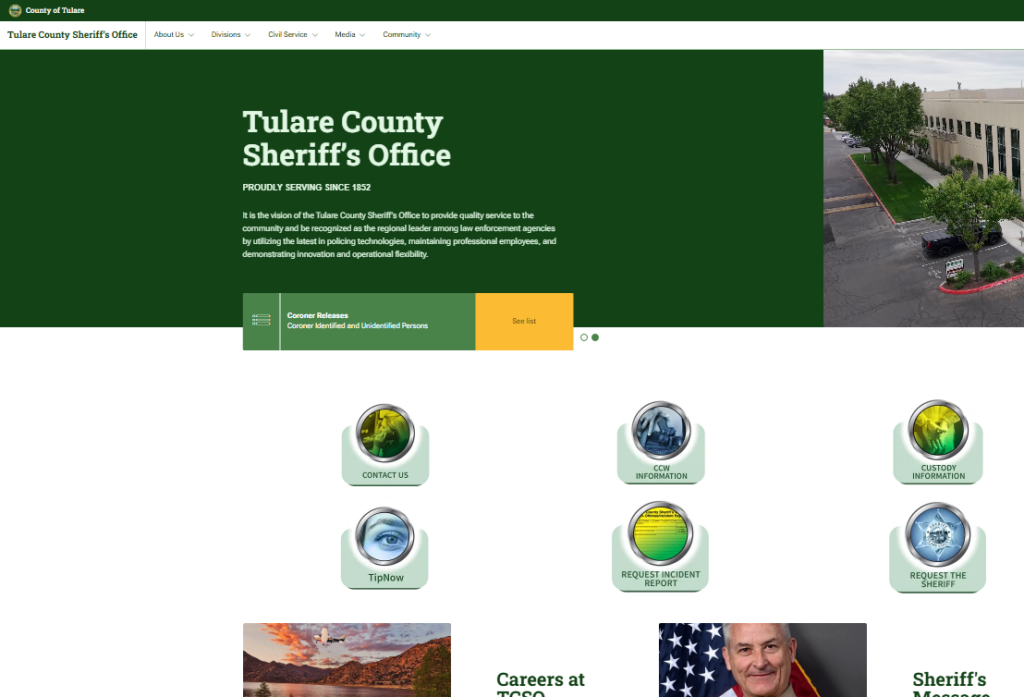
Large counties like Los Angeles update their booking logs daily, offering a record of recent arrests and current detention status. Smaller counties, such as Tulare, provide a portal listing recent bookings with basic information like arrest date, charges, and facility location.
County-Level Booking Systems
Each county manages its own booking system, containing detailed arrest records and custody status.
These systems typically include:
- Booking number assigned at intake
- Date and time of arrest
- Arresting agency information
- Current housing facility
Some counties allow direct online access, while others require a request through email or phone. Using the official portal ensures accurate results.
Differences Between Counties
Counties in California vary in update frequency, available details, and user interface. Large counties often provide interactive search tools, detailed booking logs, and downloadable arrest reports. Smaller municipalities may list only basic details, sometimes with a short delay.
When searching, users should consider:
- Whether the county provides a live jail roster
- If arrest logs include booking numbers or only names
- Any restrictions on juvenile or sealed records
Practical Tips for Online Arrest Searches
- Always use the official county or city portal to avoid outdated or inaccurate third-party data.
- Keep the booking number handy for precise results.
- Check the portal’s last updated timestamp to ensure current information.
- Use county sheriff arrest search and jail booking California keywords naturally when documenting or reporting findings.
Online arrest records in California make it possible to quickly verify the custody status of individuals while staying compliant with legal requirements. By combining official sheriff databases, county-level booking systems, and city police arrest logs, users can perform a thorough California inmate arrest search efficiently.
How Long Do Arrests Stay on Your Record in California
Arrest records in California can remain on file for different periods depending on the outcome of the case. Some records, such as DOJ RAP sheets, are retained indefinitely, while others may be sealed or removed under specific legal provisions.
DOJ RAP Sheets and Permanent Records
The California Department of Justice (DOJ) maintains a comprehensive criminal history known as a RAP sheet. This record includes all arrests, regardless of whether they resulted in a conviction. Because these records are centralized, they can remain part of the state database indefinitely. Employers, law enforcement agencies, and certain government entities may access these records under regulated circumstances. Even arrests that did not lead to charges or convictions are typically noted on a RAP sheet. While they do not carry the same weight as convictions, these entries remain visible unless a formal process is completed to seal or expunge them.
Arrests Without Convictions and Sealing Under PC 851.95
Individuals who were arrested but never convicted can petition the court under Penal Code § 851.95 to have their records sealed. This process removes the arrest entry from public access databases and official indexes, though the record may still exist internally with law enforcement. Sealing an arrest record helps prevent the negative impact of an arrest that did not result in criminal charges. Courts generally consider the lack of conviction, the nature of the alleged offense, and the time elapsed since the arrest when approving sealing requests.
Expungement Under PC 1203.4
A separate process called expungement is available under Penal Code § 1203.4 for individuals who were convicted but have completed the terms of their sentence. Expungement sets aside the conviction, and while the arrest itself may still appear in certain law enforcement databases, the conviction record is treated as dismissed for most practical purposes. Expungement can improve access to housing, employment, and educational opportunities, as the conviction is no longer considered active. Individuals often combine expungement with record sealing to maximize privacy and limit public visibility of prior arrests.
Juvenile Arrest Records
Arrests involving minors are handled differently. Juvenile arrest records are generally confidential and are automatically sealed upon the closure of the case. These records are rarely accessible to the public, though law enforcement and some state agencies may review them for specific legal purposes. Protecting juvenile arrest information reflects California’s policy of giving minors a chance to move forward without lasting public stigma. In some cases, expungement of juvenile records may also be possible, offering an additional layer of privacy.
Are California Arrest Records Free to Access?
California arrest records are not completely free, but many basic searches and electronic copies are available at minimal cost. Certain fees apply depending on the format and the agency providing the records. The California Public Records Act (CPRA) allows the public to request official government records, including arrest documents. Agencies may charge only for the direct costs of duplication, such as printing or producing electronic copies. Time spent by staff to retrieve or review records cannot be charged. This ensures that basic access to public arrest records remains affordable for the general public.
Paper vs Electronic Records
When requesting arrest records, the format affects cost. Paper copies usually carry a small per-page fee, often ranging from $0.10 to $0.25 per page, depending on the law enforcement agency. Many counties and city police departments offer electronic copies, such as PDFs or email attachments, which may be free or have minimal duplication fees. Electronic delivery is typically faster and reduces administrative costs for both the requester and the agency. Some agencies provide searchable online portals where users can view recent bookings, custody information, or arrest logs without any fee. This allows individuals to conduct a preliminary arrest lookup without mailing or visiting the records office.
DOJ Criminal History Fees
For a statewide criminal history report, the California Department of Justice (DOJ) handles requests through its record review process or Live Scan fingerprinting system. The standard fee for a DOJ criminal history report is $28, which covers processing and background checks. This fee applies whether the record is requested for personal use, employment, housing, or volunteer purposes. The DOJ may provide fee waivers for certain applicants under qualifying circumstances, such as nonprofit or housing requests, but these must be specifically requested and approved.
Live Scan Fingerprinting Costs
Live Scan fingerprinting is required for DOJ background checks when fingerprints are needed to verify identity. The cost varies by location, typically ranging from $10 to $25 per fingerprint session. Fees are charged by the Live Scan operator in addition to the DOJ processing fee. Some agencies accept electronic payment or cash, while others may require a money order. Live Scan ensures that arrest records are accurately matched to the correct individual, reducing errors in criminal history reports.
Fee Waivers and Cost Reductions
In some cases, fee waivers are available to reduce or eliminate the costs of accessing arrest records. Local law enforcement agencies or the DOJ may grant waivers if the request serves public interest purposes, involves low-income applicants, or is related to housing or employment for nonprofit organizations. Requesters should contact the agency in advance to determine eligibility and any required documentation.
Police Departments and Arrest Record Custodians in California
Local police departments and county sheriff’s offices play a central role in maintaining arrest records in California. Each department manages its own records, which means users often need to contact the specific agency that handled the arrest to obtain accurate information.
Role of Local Police Departments
Police departments are responsible for recording arrests that occur within their city limits. These records include police department arrest logs, booking numbers, charges, and custody status. Local law enforcement agencies such as the Dinuba Police Department or the Tulare Police Department maintain detailed logs of daily bookings, ensuring that arrest information is documented promptly and accurately. For individuals seeking arrest information, contacting the city police department where the arrest occurred is often the first step.
Role of County Sheriff Offices
County sheriff offices, on the other hand, handle arrests made in unincorporated areas and oversee county jails. These offices manage county-level arrest records and custody information, including inmates held at county facilities. The Tulare County Sheriff’s Office and the Visalia Police Department maintain online portals and public record request systems that allow users to check law enforcement lookup information, such as active warrants, custody status, or recent bookings.
Why Departments Maintain Separate Systems
Because departments maintain separate systems, arrest records are not always consolidated statewide. A person arrested in one city may not appear in a neighboring city’s database, even if both fall under the same county. Understanding county jurisdiction is crucial for accurate searches. Users often need to contact multiple departments or the relevant sheriff’s office to obtain a complete view of a person’s arrest history.
For practical purposes, here are a few examples of California law enforcement agencies and the records they maintain:
- Dinuba Police Department: Handles city arrests, provides booking logs, and responds to public record requests.
- Tulare Police Department: Maintains arrest records for city incidents and assists with law enforcement inquiries.
- Visalia Police Department: Publishes arrest information, including booking numbers and custody updates.
- Tulare County Sheriff’s Office: Oversees county jail inmates, maintains arrest records, and manages warrants across unincorporated areas.
Contacting these agencies directly is often necessary when searching for specific arrest information, especially for older records or cases not published online. Each department may have unique submission processes, including in-person requests, mail forms, or online portals. Law enforcement agencies in California take steps to ensure that requests comply with privacy laws, and fees may apply for copies or certified records.
Arrest Records vs Criminal Records in California
Arrest records and criminal records are related but distinct. An arrest record documents that a person was taken into custody, while a criminal record shows convictions and legal outcomes.
What Is an Arrest Record?
In California, arrest records are generated when law enforcement detains someone based on probable cause or a warrant. These records typically include the individual’s name, date of birth, arrest date, charges, booking number, and the arresting agency. Arrest records may also note the location of custody and bail information if applicable. Importantly, an arrest does not indicate guilt, and records may exist even if the case is dismissed or never leads to prosecution.
What Is a Criminal Record?
Criminal records, often referred to as a criminal history report, go beyond arrests. They include outcomes such as convictions, plea deals, probation orders, and court dispositions. A criminal record may also note expungements or sealed cases that have been legally cleared from public access. These records are maintained by the California Department of Justice (DOJ) and serve as the official record of a person’s legal history.
(FAQ) About California Arrest Search
California arrest records can often be accessed by the public, although some information may require a small fee or formal request. Individuals can use official online portals or contact law enforcement agencies to perform an arrest lookup in California.
Can I look up someone’s arrest for free in California?
Some arrest information is available for free through county and city law enforcement websites, which often provide booking logs and recent arrest reports. These logs typically show the arrestee’s name, booking number, date of arrest, and charges, allowing users to perform a basic arrest lookup in California without cost. While this information is limited and does not include a complete criminal history, it is useful for general research or public inquiries, whereas comprehensive reports from the California Department of Justice require a small fee and sometimes a Live Scan fingerprint submission.
Are arrest records public in California?
Many arrest records are considered public under the California Public Records Act (CPRA), allowing the public to view certain law enforcement documents such as booking details and arrest charges. Adult arrests are generally accessible, but juvenile records, sealed records, or ongoing investigation files are exempt to protect privacy. Public arrest records provide transparency about law enforcement activity while distinguishing between arrests and convictions, ensuring users know the context of the information.
How do I remove an arrest from my record?
Arrest records that did not lead to a conviction can sometimes be removed or sealed through legal petition under Penal Code § 851.95, allowing them to be destroyed or hidden from public indexes. For convictions, an expungement under Penal Code § 1203.4 may set aside the conviction, although the original arrest may remain unless separately sealed. Successfully filing a petition ensures that the arrest record no longer appears in public law enforcement lookup systems, including county databases and certain online arrest records databases, protecting the individual’s privacy.
Do dismissed arrests still show?
Even if charges are dismissed, or an arrest does not result in a conviction, the record may still exist in law enforcement databases or on the DOJ RAP sheet until it is officially sealed. Sealed records become largely inaccessible to the public, although they remain available to law enforcement and specific employers in sensitive roles. This ensures that while dismissed arrests can temporarily appear in public arrest records, legal measures exist to limit their visibility and maintain fairness for the individual.
Can I search statewide or only by county?
Arrest searches can be performed at both the county and statewide levels, depending on the type of information needed. Local police departments and county sheriff’s offices provide access to arrest records and booking logs for recent incidents within their jurisdiction, while the California Department of Justice manages statewide arrest records and comprehensive criminal history reports. Statewide searches may involve small fees, identity verification, and fingerprint submission to ensure accurate results, while county-level searches often provide free, immediate access to recent bookings.